Community recipe
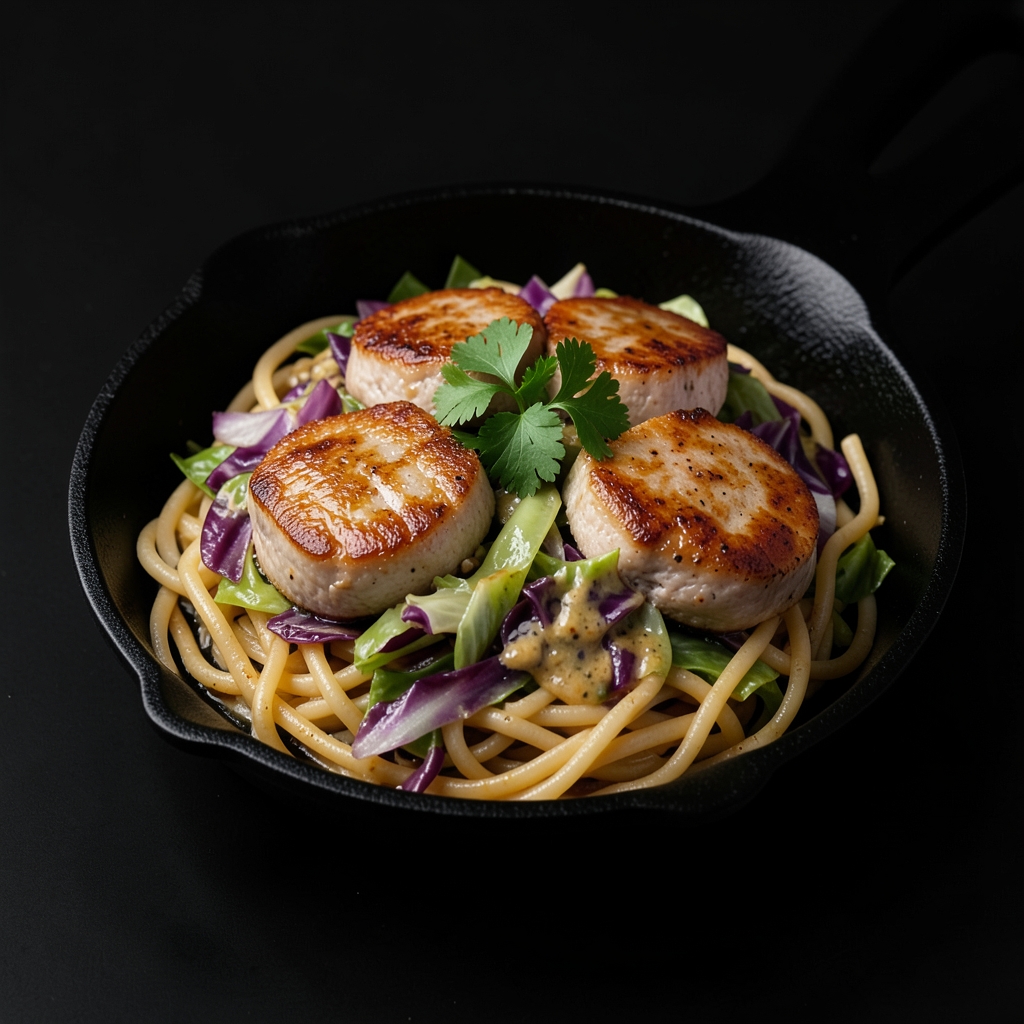
Pork Medallions with Cider-Dijon Cabbage and Buttered Egg Noodles
Tender, golden pork medallions nestle into sweet-tart cider cabbage with a creamy Dijon finish, served over soft egg noodles. A spoonful of fresh parsley keeps this cozy skillet supper bright. Makes 4 servings.
- Serves
- 4
- Prep
- 15 min
- Cook
- 33 min
- Difficulty
- medium
Get ready
Ingredients
- 1.5 lb pork tenderloins, trimmed and sliced into 1-inch medallions
- 1 tbsp olive oil
- 1 tsp kosher salt, divided
- 0.5 tsp black pepper, divided
- 12 oz egg noodles
- 1 yellow onion, peeled and thinly sliced
- 1 apple, cored and thinly sliced
- 1 green cabbage, small; thinly sliced (about 6 cups)
- 2 tbsp fresh parsleies, chopped
- 2 tbsp unsalted butters
- 1 tbsp all-purpose flour
- 1 cup apple cider
- 1 cup chicken broth
- 1 tbsp dijon mustard
- 0.5 cup heavy cream
Make it
Instructions
- 01
Trim, slice, and season the pork
Set a large skillet, a cutting board, a chef’s knife, and a large pot near the stove. Pat 1½ lb pork tenderloin dry, trim away any silver skin, and slice crosswise into medallions about 1 inch thick. Wash and dry your hands and work surface after handling raw pork. Season the medallions with 1 tbsp olive oil, 1 tsp kosher salt, and ½ tsp black pepper, using about half the salt and pepper now and reserving the rest for the cabbage. Keep the pork separate from ready-to-eat foods. | Why: Even slices cook at the same rate, and reserving seasoning lets you season the whole dish deliberately.
- 02
Cook the egg noodles
Fill the large pot with water, bring it to a boil over high heat, and add 12 oz egg noodles. Cook according to the package directions, usually 6–8 minutes, stirring once or twice, until tender but still pleasantly springy. Drain well in a colander and set aside; do not rinse. | Why: Cooking the noodles first leaves the stove free for the pork and cabbage skillet.
- 03
Sear the pork medallions
Heat the large skillet over medium-high heat for 2 minutes, until a drop of water sizzles on contact. Arrange the pork medallions in one layer, working in batches if needed so they are not crowded. Sear for 3–4 minutes per side, until deeply golden; reduce the heat slightly if the oil begins to smoke. Check the thickest medallion with an instant-read thermometer and cook until it reaches 145°F. Transfer the pork to a clean plate and rest for at least 3 minutes. Keep any juices on the plate for the sauce. | Why: A hot, uncrowded pan browns the meat, while resting keeps the medallions juicy.
- 04
Make the cider-Dijon cabbage
While the pork rests, peel and thinly slice 1 medium yellow onion. Core and thinly slice 1 medium apple; there is no need to peel it. Remove any wilted outer leaves from 1 small green cabbage, rinse it, pat it dry, quarter it, cut away the core, and slice it into thin ribbons. Chop 2 tbsp fresh parsley and set it aside for serving. Set the skillet over medium heat and melt 2 tbsp unsalted butter. Add the onion and apple and cook for 4 minutes, stirring, until softened and fragrant. Stir in the cabbage and cook for 5 minutes, turning it often, until wilted with a few lightly browned edges. Sprinkle in 1 tbsp all-purpose flour and stir for 30 seconds. Pour in 1 cup apple cider and 1 cup chicken broth, scraping up the browned bits. Stir in 1 tbsp Dijon mustard and the reserved salt and pepper from the first step. Simmer uncovered for 4–5 minutes, stirring occasionally, until the cabbage is tender and the sauce lightly coats a spoon. Stir in ½ cup heavy cream and the pork’s resting juices, then simmer gently for 1 minute; avoid a hard boil. Taste and adjust the seasoning if needed. | Why: Cider and apple balance the savory pork, while a little flour and cream turn the pan juices into a silky sauce.
- 05
Warm through and serve
Add the rested pork medallions and any accumulated plate juices to the skillet. Turn them once in the sauce and warm over low heat for 1–2 minutes, just until hot; do not simmer, so the pork stays tender. Divide the drained noodles among four plates, spoon the cider cabbage and sauce over them, and arrange the pork on top. Finish with the chopped parsley and serve immediately. | Why: Gentle reheating brings the pork back to serving temperature without overcooking it.