Community recipe
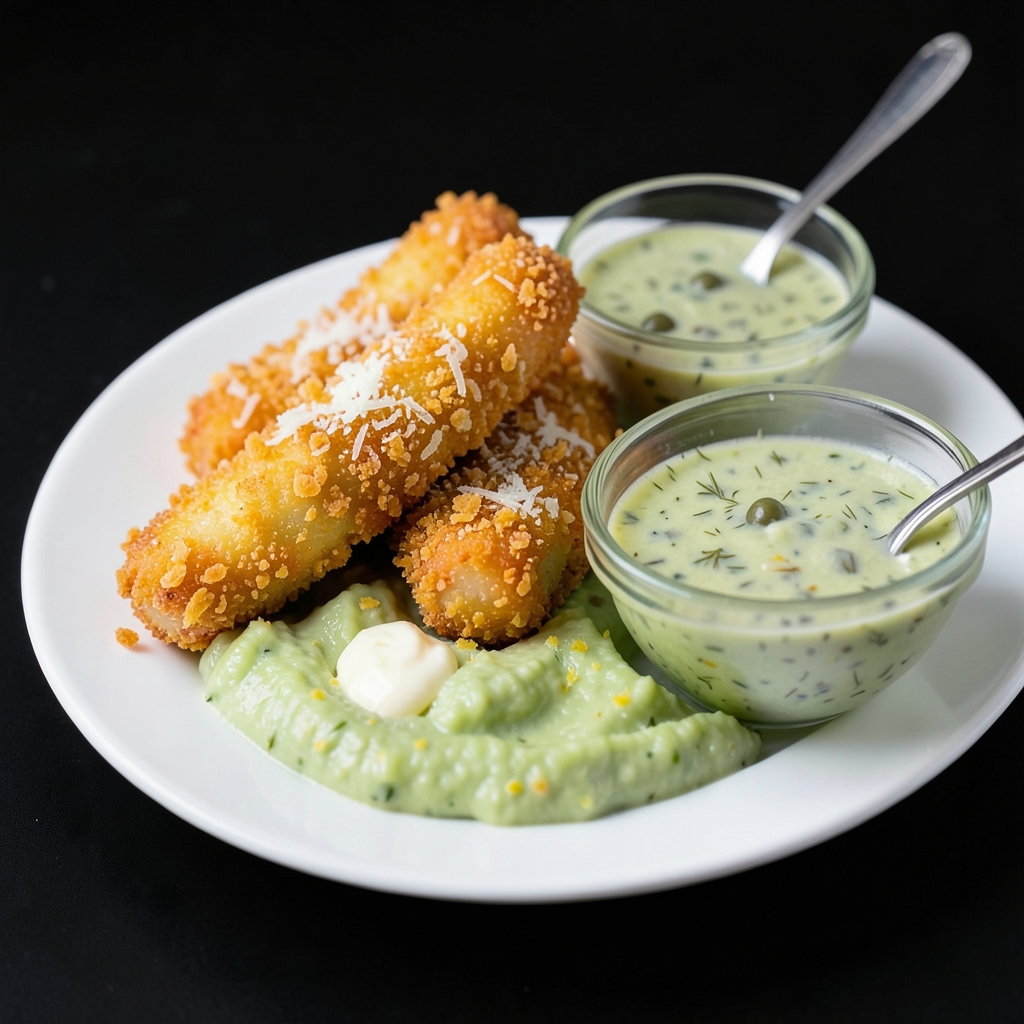
Cornflake-Crisped Fish Fingers with Lemon Pea Mash
Golden oven-baked fish fingers get an extra-crunchy cornflake and Parmesan jacket, served with buttery lemon pea mash and a tangy dill-caper dip. A familiar, weeknight-friendly plate with bright, fresh flavor and no deep-frying.
- Serves
- 4
- Prep
- 20 min
- Cook
- 32 min
- Difficulty
- medium
Get ready
Ingredients
- 700 g potatoes, rinsed, peeled, and cut into 2 cm chunks
- 1 tsp fine salt
- 1 tbsp fresh dill, finely chopped
- 1 tbsp caper, finely chopped
- 0.75 cup plain greek yogurt
- 1 tsp dijon mustard
- 1 tsp cider vinegar
- 300 g frozen peas
- 30 g unsalted butters
- 60 ml milks
- 0.5 tsp ground black pepper
- 1 lemon, zested; half juiced and half cut into wedges
- 0.33 cup all-purpose flour
- 1 large egg, beaten
- 1 cup panko breadcrumb
- 1 cup cornflake, finely crushed
- 0.33 cup parmesan, finely grated
- 1 tsp paprika
- 600 g skinless cod fillets, patted dry and cut into 2 cm-thick strips
- 1.5 tbsp olive oils
Make it
Instructions
- 01
Set up and boil the potatoes
Set a rack in the center of the oven and preheat it to 220°C / 425°F. Line a rimmed baking sheet with parchment and set a wire rack on top if you have one. Put a large pot of cold water on the stove. Rinse, peel, and cut 700 g potatoes into even 2 cm chunks; add them to the pot. Stir in 1 tsp fine salt, bring to a boil over high heat, then reduce to a steady simmer. Cook for 15–18 minutes, until a knife slides easily into the largest pieces. | Why: Even potato pieces cook uniformly and will mash smoothly.
- 02
Mix the tangy dill-caper dip
While the potatoes simmer, finely chop 1 tbsp fresh dill and 1 tbsp capers. In a small bowl, stir them into ¾ cup plain Greek yogurt, 1 tsp Dijon mustard, and 1 tsp cider vinegar until evenly combined. Taste and add a pinch of the measured salt if desired, cover, and refrigerate until serving. | Why: Chilling briefly lets the sharp, herbal flavors meld into a balanced dip.
- 03
Finish the lemon pea mash
When the potatoes are nearly tender, stir in 300 g frozen peas and simmer for 3 minutes, until the peas are hot and bright green. Drain well and return everything to the warm pot. Add 30 g unsalted butter, 60 ml milk, and ½ tsp ground black pepper; mash to a rustic, creamy texture. Zest 1 lemon, cut it in half, and squeeze one half into the mash; cut the other half into wedges for serving. Stir in the zest and juice, then taste and adjust with some of the measured salt if needed. Cover the pot to keep the mash warm. | Why: Adding the peas at the end preserves their color and fresh sweetness, while lemon keeps the buttery mash lively.
- 04
Bread the fish fingers
Set out three shallow dishes. In the first, place ⅓ cup all-purpose flour. In the second, beat 1 large egg until no streaks remain. In the third, combine 1 cup panko breadcrumbs, 1 cup finely crushed cornflakes, ⅓ cup finely grated Parmesan, and 1 tsp paprika. Pat 600 g skinless cod fillets thoroughly dry with paper towels—do not rinse raw fish—and cut into strips about 2 cm thick. Season the strips with about ¼ tsp of the measured salt and a little of the measured pepper. Coat each piece lightly in flour, dip it in egg, then press it into the crumb mixture on all sides. Arrange the coated pieces on a clean plate. | Why: Dry fish and a firm crumb press help the crunchy coating cling instead of turning soggy.
- 05
Bake until crisp and flaky
Arrange the breaded fish in a single layer on the prepared rack or parchment-lined sheet, leaving a little space between pieces. Drizzle evenly with 1½ tbsp olive oil. Bake at 220°C / 425°F for 12–15 minutes, turning the pieces once after about 8 minutes, until the coating is deep golden and crisp and the fish is opaque and flakes easily. For a precise check, the thickest piece should reach 63°C / 145°F internally. | Why: The hot oven and a light coating of oil crisp the crumbs without deep-frying.
- 06
Plate and serve
Let the fish fingers rest on the rack for 2 minutes so the coating stays crisp. Spoon the warm pea mash onto plates, add the fish fingers and the chilled dill-caper dip, and serve with the reserved lemon wedges. | Why: A brief rest protects the crunchy crust, and lemon at the table lets everyone brighten the plate to taste.