Community recipe
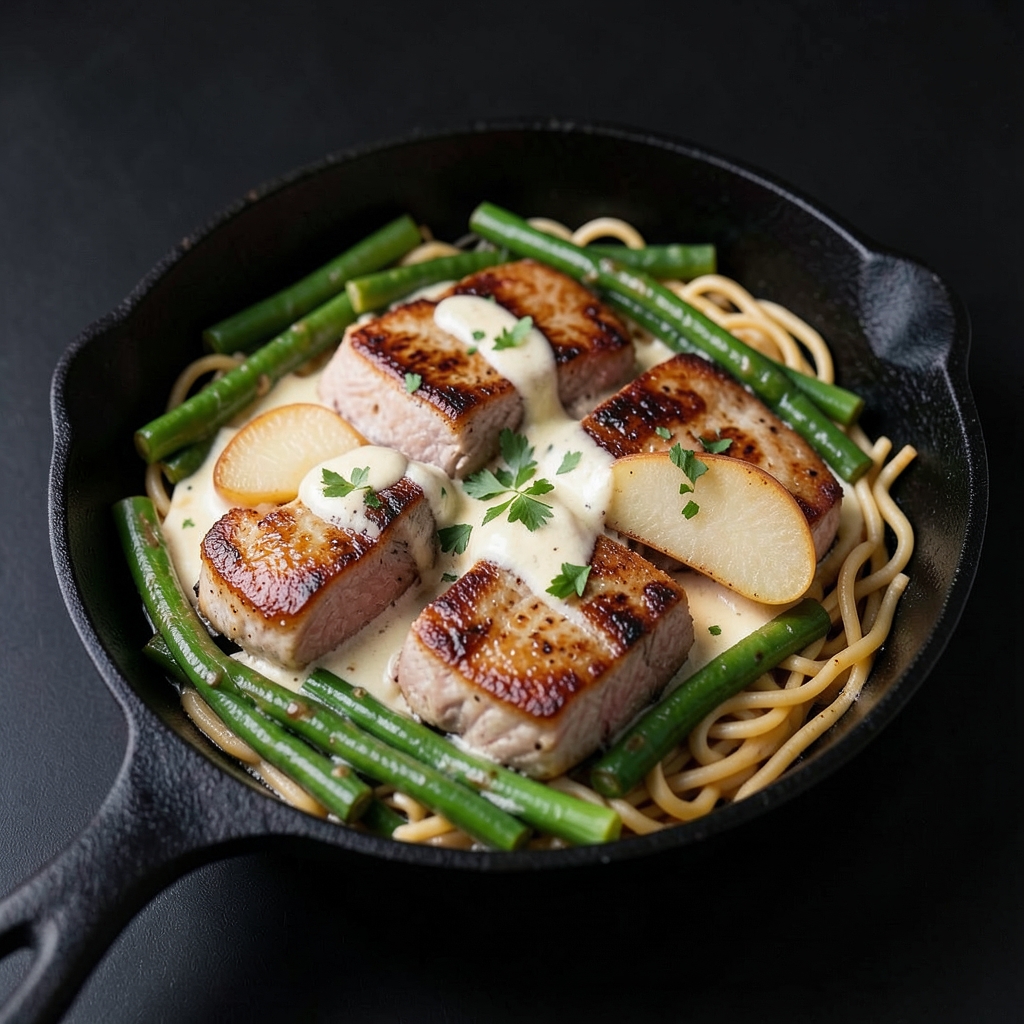
Pork Medallions with Pear-Dijon Cream and Garlicky Green Beans
Quick-seared pork tenderloin meets sweet, juicy pear and a tangy Dijon cream sauce, with crisp-tender green beans and buttery egg noodles to catch every drop. A cozy, weeknight-friendly skillet supper with a fresh twist.
- Serves
- 4
- Prep
- 15 min
- Cook
- 25 min
- Difficulty
- medium
Get ready
Ingredients
- 2 tsp fine salt
- 300 g wide egg noodles
- 450 g green beans, rinsed, dried, and trimmed
- 1 shallot, peeled and finely chopped
- 1 pear, cored and diced
- 2 garlic cloves, minced
- 600 g pork tenderloins, patted dry and cut into 2.5 cm medallions
- 0.5 tsp black pepper, freshly ground
- 1 tbsp olive oil
- 180 ml low-sodium chicken broths
- 1 tbsp dijon mustard
- 80 ml heavy creams
- 1 tbsp apple cider vinegar
- 1 tsp fresh thyme leaf, stripped from the stems
- 0.25 tsp fine salt
- 1 tbsp unsalted butter
- 2 tbsp fresh parsleies, chopped
Make it
Instructions
- 01
Boil the noodles
Set a large pot of water over high heat and bring it to a rolling boil. Stir in 2 tsp fine salt and 300 g wide egg noodles. Cook according to the package directions, usually 7–9 minutes, until tender but still pleasantly firm. Drain well and keep warm; reserve a little cooking water if you like a looser finish later. | Why: Salting the water seasons the noodles from within, and draining them promptly keeps them from turning soft.
- 02
Prep and sear the pork
While the water heats, set out a large skillet and a clean plate. Rinse and thoroughly dry 450 g green beans, then trim the stem ends. Peel and finely chop 1 shallot; core and dice 1 firm pear; mince 2 garlic cloves. Pat 600 g pork tenderloin dry and slice it crosswise into 2.5 cm medallions. Season both sides with 1/2 tsp freshly ground black pepper. Heat 1 tbsp olive oil in the skillet over medium-high heat until shimmering. Working in batches if needed, sear the medallions for about 2 minutes per side until deeply golden, then transfer them to the clean plate; they will finish cooking in the sauce. | Why: Drying the pork helps it brown rather than steam, while batch searing builds flavor without crowding the pan.
- 03
Make the pear-Dijon pan sauce
Lower the skillet to medium heat. Add the trimmed beans and cook, tossing occasionally, for 4 minutes, until bright green with a few browned spots. Add the chopped shallot and diced pear; cook for 2–3 minutes until the shallot softens and the pear begins to turn tender. Stir in the garlic for 30 seconds, just until fragrant. Pour in 180 ml low-sodium chicken broth, then stir in 1 tbsp Dijon mustard, 80 ml heavy cream, 1 tbsp apple cider vinegar, 1 tsp fresh thyme leaves, and 1/4 tsp fine salt. Bring to a gentle simmer and cook for 2 minutes, stirring, until the sauce is lightly thickened. Nestle the pork and any juices back into the skillet; cover and simmer gently for 3–5 minutes, turning once, until the thickest medallion reaches 63°C (145°F) on an instant-read thermometer. Stir in 1 tbsp unsalted butter until glossy, then remove the skillet from the heat. | Why: The sauce loosens the browned bits in the pan, while the thermometer ensures juicy pork is safely cooked.
- 04
Rest, toss, and serve
Transfer the pork to a board and let it rest for 3 minutes. Meanwhile, return the drained noodles to their pot and spoon in a little of the pear-Dijon sauce, tossing to coat; add a splash of reserved noodle water if needed. Divide the noodles among four plates, top with the green beans and sauce, and arrange the rested pork medallions on top. Finish with 2 tbsp chopped fresh parsley and serve hot. | Why: Resting lets the pork juices settle, and coating the noodles makes sure none of the creamy, tangy sauce goes to waste.